 HOME
AUGUSTE RENOIR
CLAUDE MONET
GEORGES SERAT
VAN GOGH
HOME
AUGUSTE RENOIR
CLAUDE MONET
GEORGES SERAT
VAN GOGH
He has specialized in making paintings regarding landscapes and everyday activities. Monet was raised in Normandy and got into the Paris studio by Charles Gleyre ad shared his classes with Auguste Renoir and other impressionists. Only a few of his artworks were accepted into the annual Salons exhibition in the 1860s, however, most of them were rejected. And this was because the critics thought about the rought brushstrokes, as if the painting was not finished. He would paint the surroundings of northern France, and even London, escaping the Franco-Prussian War.
He would go with his large canvas outdoors to paint the scene live and then add retouching to his studio. He was inspired by the Japanese woodblock prints, so he made his compositions asymmetrical. He added more vibrant colors to his paintings, compared to the darker tones from classical paintings.
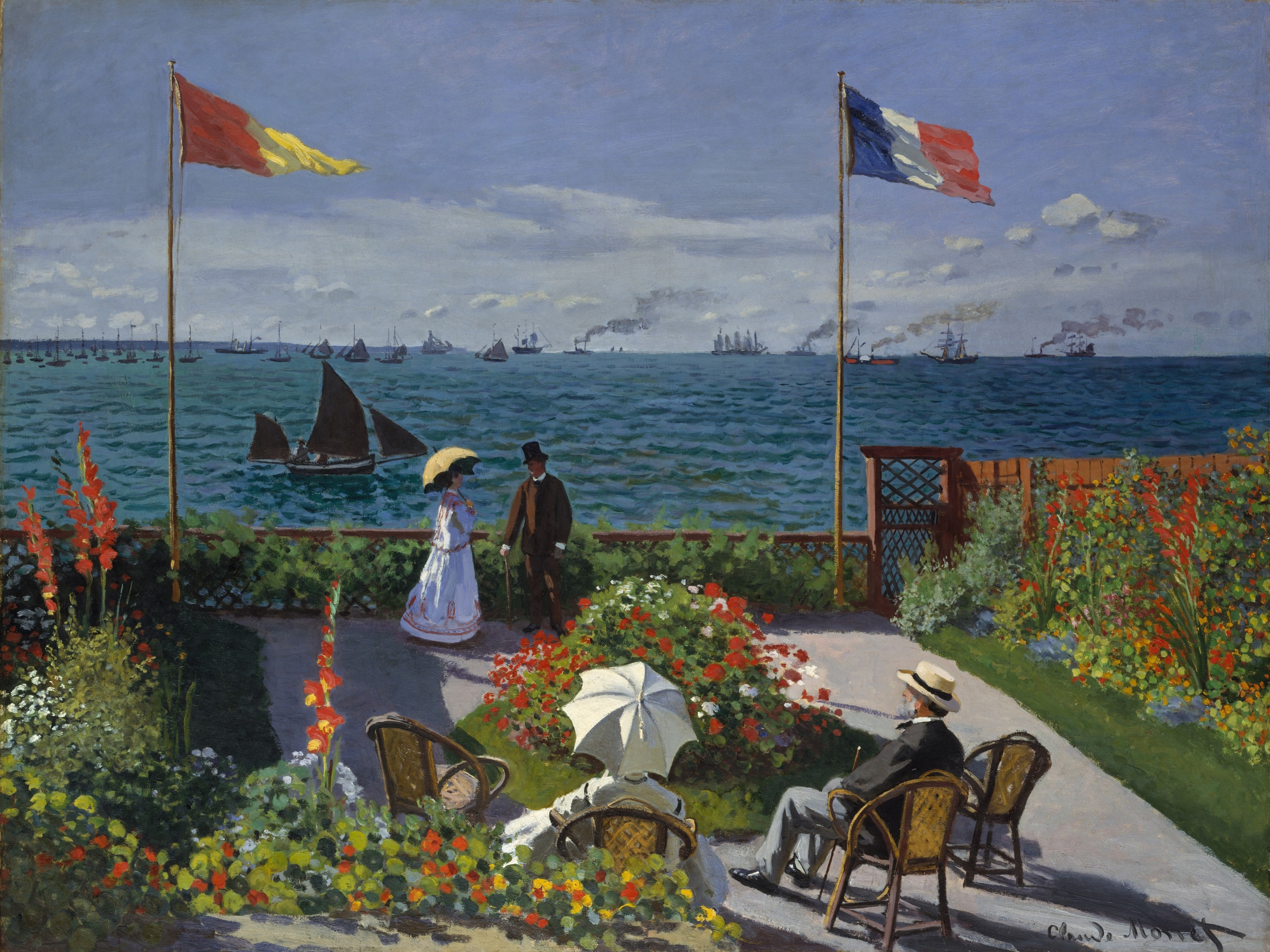
Medium: Oil on canvas
Date: 1867
This painting captures a scene happening in the dance garden of Butte Montmartre. It was displayed at the Impressionist exhibition in 1877.
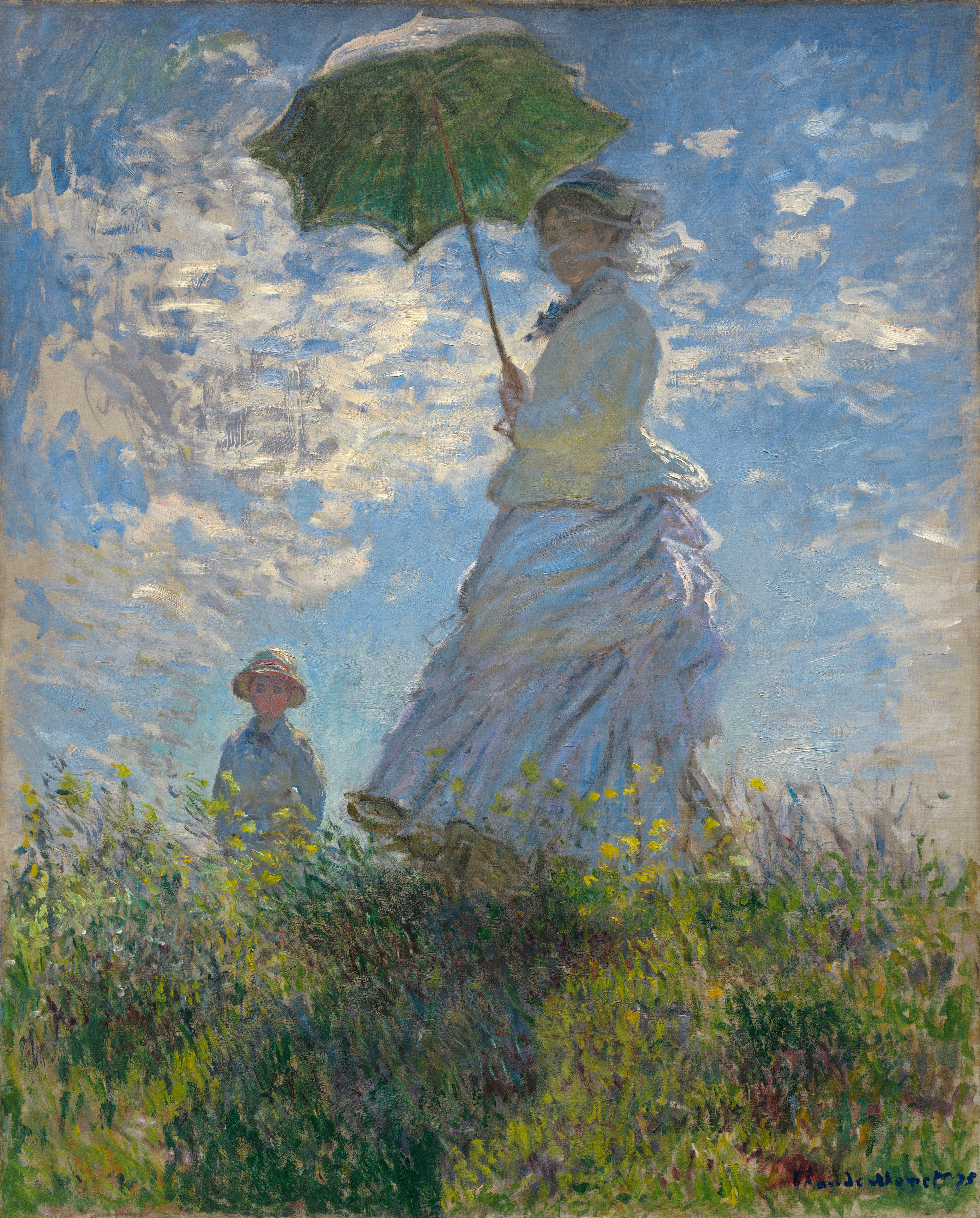
Medium: Oil on canvas
Date: 1875
The painting depicts a woman holding a parasol outdoors with her son on a grassy hillside.
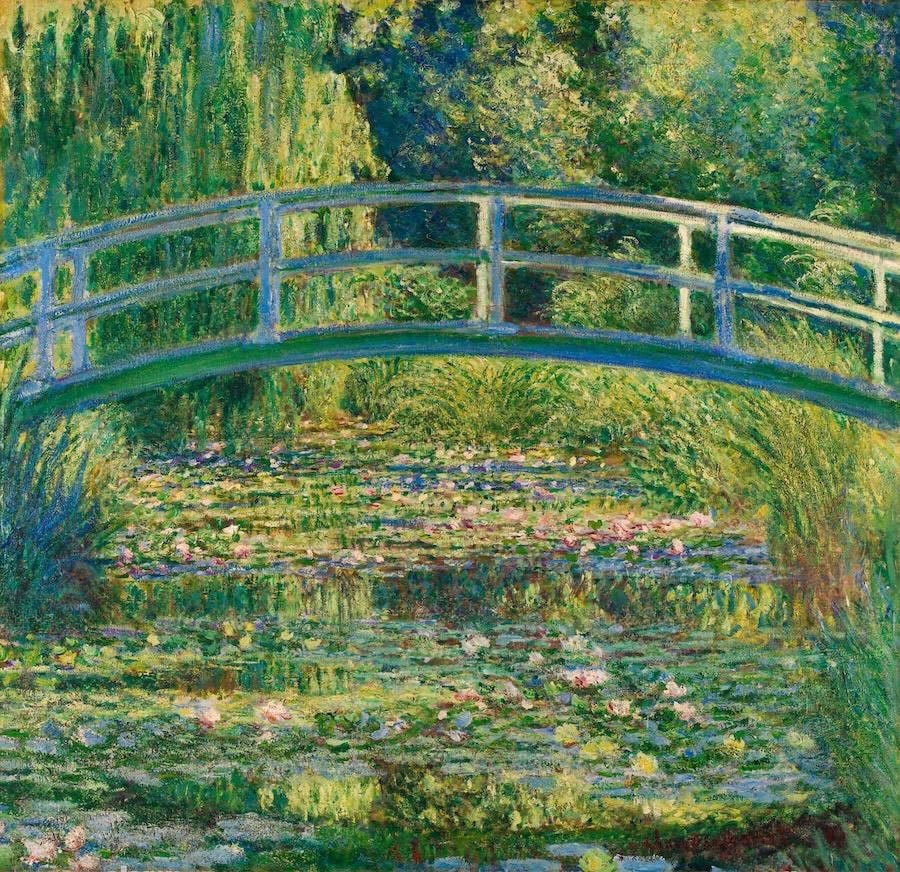
Medium: Oil on canvas
Date: 1899
When he was living in Giverny, he began to remodel an area near his home to build a pond, inspired by the Japanese-style setting, including the characteristic bridge. Later, the topic of the lily pond became of strong interest to the artist, since he made around 18 versions of this motif.
Sources
https://www.metmuseum.org/es/essays/claude-monet-1840-1926
https://www.nationalgallery.org.uk/paintings/claude-monet-bathers-at-la-grenouillere
https://www.artic.edu/artworks/87088/water-lily-pond
G Street Northwest &, 8th St NW, Washington, DC 20004