Overlooked Black and Brown innovators, from the 19th century through the present, have been foundational to fields ranging from telecommunications and industrial machinery to the personal computer and 3D imaging.
Communications and Core Infrastructure
Granville T. Woods – Multiplex Telegraph and Rail Innovations
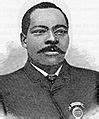
Granville T. Woods (1856–1910), dubbed the “Black Edison,” held 45 patents, primarily in railway and telegraphy. One of his most important inventions was the multiplex telegraph, a device that allowed telephone and telegraph signals to share a single line. This meant the same wires could carry both voice calls and telegrams simultaneously—a breakthrough in 19th-century communications. As IEEE Spectrum notes, the multiplex telegraph was “the pinnacle of telecommunications technology of its day,” enabling Edison and Bell systems to connect more efficiently. Woods’s many innovations (such as an improved railway semaphore) were historically overlooked in favor of crediting Edison, but technical histories now credit Woods’s rail telegraph systems as foundational.
Lewis H. Latimer – Carbon Filament for Incandescent Light
Lewis H. Latimer (1848–1928), a Black inventor and draftsman, made critical improvements to electric lighting. In 1882, he patented a carbon filament manufacturing process that dramatically extended the life of incandescent bulbs. Latimer devised a way to produce stronger carbon filaments (by impregnating carbonized threads with chemicals), enabling Thomas Edison’s lightbulbs to be mass-produced and last much longer. Latimer’s method “enabled Maxim’s bulbs to be mass produced,” solving breakage problems and making electric light practical for everyday use. Patent-office retrospectives now highlight Latimer’s role as the “draftsman-turned-inventor” who invented the “carbon filament” that made long-lasting light bulbs possible.
Computing, Gaming, and Advanced Imaging
Dr. Valerie L. Thomas – Illusion Transmitter (3D Imaging)
Dr. Valerie Thomas (b. 1943) is a Black American physicist who invented the “illusion transmitter,” a 3D optical device. Working at NASA’s Goddard Space Flight Center in the 1960s, Thomas engineered a system using concave mirrors to produce real-time 3D illusions of distant objects. In 1980 she was granted a U.S. patent for this device. NASA sources note that Thomas “invented and patented the Illusion Transmitter,” which demonstrated a way to send 3D images over distance. This technology has since found applications in surgery, art, and scientific visualization. NASA now celebrates her career and patent as a milestone for women and people of color in STEM.
Dr. Mark Dean – Early IBM PC Innovations
Mark E. Dean (b. 1957), an African American engineer at IBM, helped invent the first personal computer. In the early 1980s, he co-developed the Industry Standard Architecture (ISA) bus —the system that lets PCs auto-configure plug-in devices (keyboards, printers, etc.). Dean and his colleague patented the ISA bus in 1985, enabling users to “connect computers to peripherals by simply plugging them in” . Dean holds three of the nine core patents for IBM’s original PC design and later helped design the first gigahertz microprocessor. He became IBM’s first Black Fellow in 1995. Recent histories spotlight Dean’s role as a key contributor to the design of the original IBM PC.
Gerald “Jerry” Lawson – Cartridge-Based Video Game Console
Gerald “Jerry” Lawson (1940–2011) was a Black electronics engineer who revolutionized video games. As Fairchild Semiconductor’s head of engineering, Lawson led the team that created the Fairchild Channel F (1976)—the first home console to use interchangeable ROM cartridges. Lawson “has earned credit for the co-invention of the programmable and interchangeable video game cartridge,” a format that persists today. Prior consoles had games hard-wired; Lawson’s cartridge system (inspired by 8-track tapes) let users swap games easily. The Henry Ford Museum recalls that Lawson’s design “continues to be adapted into modern gaming systems”.
Everyday Life & Industrial Machinery
Sarah E. Boone – Improved Ironing Board
Sarah E. Boone (1832–1904) was a Black inventor (born into slavery) who patented an improved ironing board in 1892. As a dressmaker, she designed a board shaped for ironing clothes’ curves, securing U.S. Patent No. 473,563. Her design significantly improved previous versions, making ironing women’s clothing “much more efficient”. Boone’s patent made her “one of the first African American women” to receive a U.S. patent. Modern sources now credit her as the inventor of the modern ironing board.
Joseph Lee – Bread-Kneading Machine and Crumbing
Joseph Lee (1849–1908) was a Black entrepreneur and inventor who transformed breadmaking. Lee invented and patented a dough kneading machine (1894) that automated bread mixing, ending long hours of manual labor. He followed this with a bread-crumbing machine to turn stale loaves into crumbs. Lee’s devices laid the groundwork for modern industrial bread and breadcrumb production. His name even appeared in the 1894 Congressional Record’s list of Black patent-holders, affirming his place in history.
George Crum – (Myth of) Potato Chips
The tale of George Speck “Crum” (1824–1914), a celebrated chef of mixed Native American and African descent, and his supposed invention of the potato chip in 1853, was widely popularized. While the story—where Crum, angry at a customer, sliced potatoes extremely thin—was charming (earning him the nickname “Edison of Grease”), researchers note the tale appears mythical. Contemporary records do not confirm the story. Historical analysis now clarifies that Crum’s potato-chip story was likely invented decades later, but the myth itself highlights how a Black/Native American chef’s potential role in culinary innovation was obscured.
Entrepreneurship and Social Infrastructure
Alonzo Herndon – Black Entrepreneurship (Atlanta Life Insurance)
Alonzo Herndon (1858–1927) was born into slavery and became one of the United States’ first Black millionaires. After building a successful barbershop empire, in 1905 he purchased a failing mutual aid society and built it into the hugely successful Atlanta Life Insurance Company. Herndon expanded its assets from $5,000 in 1905 to over $400,000 by 1922, and the firm grew into a regional enterprise across several states. At his death, he had risen “from slavery to become the wealthy head of a leading Black business”. The Georgia Encyclopedia emphasizes Herndon’s unique “leadership [blending] racial self-help and independent entrepreneurship,” highlighting his role as “Atlanta’s first African-American millionaire”.
The Negro Motorist Green Book – Safe Travel Network
“The Negro Motorist Green Book” (1936–1966) was a travel guidebook for Black Americans during the Jim Crow era. Published by Victor Hugo Green, a Black postal worker in Harlem, the Green Book listed hotels, restaurants, gas stations, and other services that welcomed Black customers. It provided “information that will keep [travelers] from running into difficulties, embarrassments,” as Green himself put it. The Jim Crow Museum notes that the Green Book “offered a directory of safe places for Black travelers to stop”. It was a crucial resource for civil rights and mobility: it allowed Black tourists to support friendly businesses and avoid segregationist hostility. Only recently has this network of safe havens been widely recognized as an ingenious response by Black communities to systemic racism.