The heart of culture—music, literature, and visual art—has always been shaped by Black and Brown voices, yet the history of credit and recognition is a stark reminder of systemic erasure.
Individual Artists and Writers
Black and Brown creators have made seminal cultural contributions that were often ignored or dismissed. The sculptor Mary Edmonia Lewis (1844–1907), the daughter of a Black father and Native American mother, was the first professional artist of African-American and Native descent to gain international acclaim.
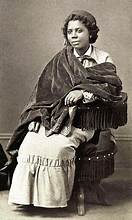
In order to avoid the widespread bigotry in the United States, Lewis relocated to Rome, where she created portraits and potent allegorical pieces honoring Black emancipation, such as her 1867 sculptureForever Free). However, she "died in obscurity" after her passing, and many of her creations were sadly lost. Lewis herself observed that there was "no room for a colored sculptor" in the United States, illustrating how institutional racism pushed artists like her to the periphery.
In a similar vein, Harlem Renaissance novelist and anthropologist Zora Neale Hurston (1891–1960) recorded Black Southern tradition in seminal works. However, because she did not have a PhD and focused on vulnerable populations, her ethnography was often disregarded by her academic peers as "unworthy." Until decades after her passing, Hurston's literary and anthropological contributions were "often overlooked."
Harriet E. Wilson’s 1859 novel Our Nig-known as the first book written by an African American woman, it was published under pseudonyms, sold badly, and disappeared from the public eye for more than a century. Scholar Henry Louis Gates Jr. only found it again in the 1980s, noting that it had "disappeared for more than 100 years." These instances show how Black literary and artistic voices are routinely erased and forgotten.
Impact of Cultural Movements
Additionally, broader cultural movements experienced undercrediting, co-optation, and deletion. Many works of music, drama, and visual art created during the Harlem Renaissance (1910s–1930s) and the subsequent Black Arts Movement were later taken without due attribution in popular culture. Iconic genres like Jazz and Blues, born in Black communities, were often adopted by white artists who received wider commercial success and recognition, overshadowing the original Black innovators.
Even world-class talents like Bessie Coleman (1892–1926), the first African-American and Native American female pilot, had to train abroad when U.S. flight schools refused her due to racism.
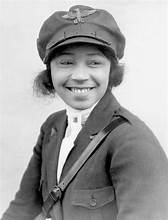
Coleman later returned to inspire others, becoming a celebrated figure in her community. However, her story reminds us that many American cultural and technical achievements were built despite, rather than because of, the existing societal structure, with pioneers forced to overcome immense discrimination to achieve their place in history. Her accomplishments are a stark reminder of the talent that was nearly lost due to racial prejudice.