Pencils: A history
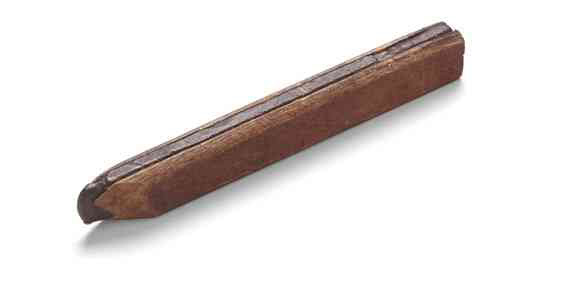
The History of the Pencil
Pencil History: The Earliest Forms of Self Expression Did you know that modern pencils owe it all to an ancient Roman writing instrument called a stylus? Scribes used this thin metal rod to leave a light, but readable mark on papyrus (an early form of paper). Other early styluses were made of lead, which is what we still call pencil cores, even though they actually are made of non-toxic graphite. But pencil history doesn’t stop there…
Graphite came into widespread use following the discovery of a large graphite deposit in Borrowdale, England in 1564. Appreciated for leaving a darker mark than lead, the mineral proved so soft and brittle that it required a holder. Originally, graphite sticks were wrapped in string. Later, the graphite was inserted into hollowed-out wooden sticks and, thus, the wood-cased pencil was born!
Nuremberg, Germany was the birthplace of the first mass-produced pencils in 1662. Spurred by Faber-Castell (established in 1761), Lyra, Steadtler and other companies, an active pencil industry developed throughout the 19th century industrial revolution.
Pencil History: America Expresses Itself
Early settlers depended on pencils from overseas until the war with England cut off imports. William Monroe, a Concord, Massachusetts cabinet-maker, is credited with making America’s first wood pencils in 1812. Another Concord native, famous author Henry David Thoreau, was also renowned for his pencil-making prowess.
The American pencil industry took off when The Joseph Dixon Crucible Company (now Dixon Ticonderoga) and more pencil manufacturers started getting into the act and, towards the end of the 19th century, New York and New Jersey hosted several factories established by prominent German pencil manufacturers, including Faber-Castell, Eberhard Faber, Eagle Pencil Company (later Berol) and General Pencil Company.
The first mass-produced pencils were natural and unpainted to show off high-quality wood casings. But, by the 1890s, many pencil manufacturers started painting pencils and imprinting them with brand names. There’s an interesting story behind how the familiar yellow pencil came to be.
Pencil History: Following the Wood
Early American pencils were made from Eastern Red Cedar, a strong, splinter-resistant wood that grew in Tennessee and other parts of the Southeastern United States. To be nearer to the source, Northern manufacturers migrated south and set up wood mills until, eventually, the greatest concentration of U.S. pencil manufacturers had established factories in Tennessee. To this day, U.S. producers are primarily concentrated in the South.
By the early 1900s, however, additional sources of wood were needed. Pencil manufacturers turned to California’s Sierra Nevada mountains, where they found Incense-cedar, a species that grew in abundance and made superior pencils. California Incense-cedar soon became the wood of choice for domestic and international pencil makers around the world.
To ensure the continued availability of Incense-cedar, forest workers have carefully managed the stands of trees, and timber companies have committed to harvesting Incense-cedar on a sustained-yield basis. “Sustained-yield” means that the annual growth of the forest is greater than the amount harvested from the forest. Forests managed on a sustained-yield basis are abundant and healthy, and will continue to provide wood for people and habitats for animals for generations to come.
Pencil History: A Global Industry
The history of the pencil industry includes a great number of important companies and brands from around the world. Many now have factories globally. Factors contributing to the challenging impact of globalization, resulting in a great shift of pencil production increasingly being concentrated in Asia over the past 20 years, include:
- • The reduction of trade barriers
- • The introduction of containerized shipments of goods overseas
- • The comparative differences in raw material costs between countries
and the lower cost of transporting people and information around the world.
Expensive Pencils: Blackwing
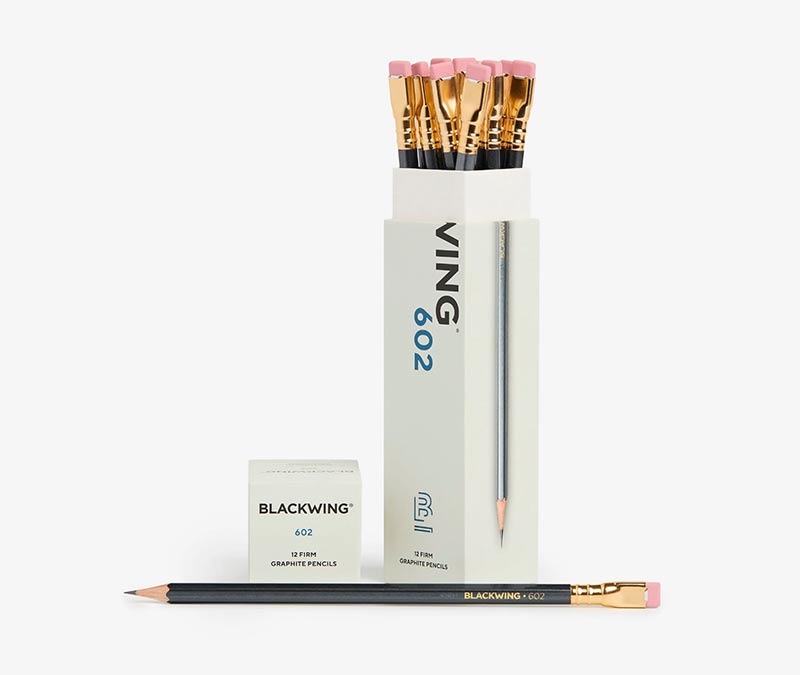
THE RISE AND FALL
Legendary Grammy, Emmy, Pulitzer and Academy Award winners have created with the Blackwing 602 pencil. The list of known users includes John Steinbeck, Looney Tunes creator Chuck Jones, and Disney animator Shamus Culhane who, according to animation historian Charles Soloman, asked to be buried with his Blackwing 602.
Blackwing’s roots go back to the 1930’s when the 602 model was first introduced by the Eberhard Faber Pencil Company. Over the years, the pencil with the unique rectangular eraser became synonymous with quality. Then, in 1998, after several corporate acquisitions, it was discontinued, but not forgotten. In fact, fans began paying as much as $40 on eBay for a single Blackwing pencil.
THE REVIVAL
In 2007, we introduced our Palomino range of pencils using Genuine Incense-cedar and premium Japanese graphite. Artists and writers started comparing them to their beloved Blackwing 602s, and folks began asking us to consider reviving the Blackwing brand. We tapped into over 100 years of family-run pencil industry experience to re-introduce Blackwing pencils in 2010.
In the 10 years since its revival, Blackwing has grown from a single pencil into a culture. It’s a culture that's all about living mindfully and finding balance in our fast paced lives. Click below to read more about how we're helping the world slow down.