Bioluminescence occurs through a chemical reaction that produces light energy within an organism's body. For a reaction to occur, a species must contain luciferin, a molecule that, when it reacts with oxygen, produces light. There are different types of luciferin, which vary depending on the animal hosting the reaction. Many organisms also produce the catalyst luciferase, which helps to speed up the reaction. Animals can closely control when they light up by regulating their chemistry and brain processes depending on their immediate needs, whether a meal or a mate. Some organisms even bundle the luciferin with oxygen in what is called a “photoprotein”—like a pre-packaged bioluminescence bomb—that is ready to light up the moment a certain ion (typically calcium) becomes present. They can even choose the intensity and color of the lights.
Bioluminescence is found in many marine organisms: bacteria, algae, jellyfish, worms, crustaceans, sea stars, fish, and sharks to name just a few. In fish alone, there are about 1,500 known species that luminesce. In some cases, animals take in bacteria or other bioluminescent creatures to gain the ability to light up. For example, the Hawaiian bobtail squid has a special light organ that is colonized by bioluminescent bacteria within hours of its birth. But usually, the animal itself contains the chemicals necessary for the reaction that produces bioluminescence. The number of species that bioluminesce and the variations in the chemical reactions that produce light are evidence that bioluminescence has evolved many times over—at least 40 separate times! This number continues to grow as research makes new discoveries. In 2018, scientists discovered the ray-finned fishes themselves evolved bioluminescence 27 separate times. That's quite an increase from the handful of times that were known before.
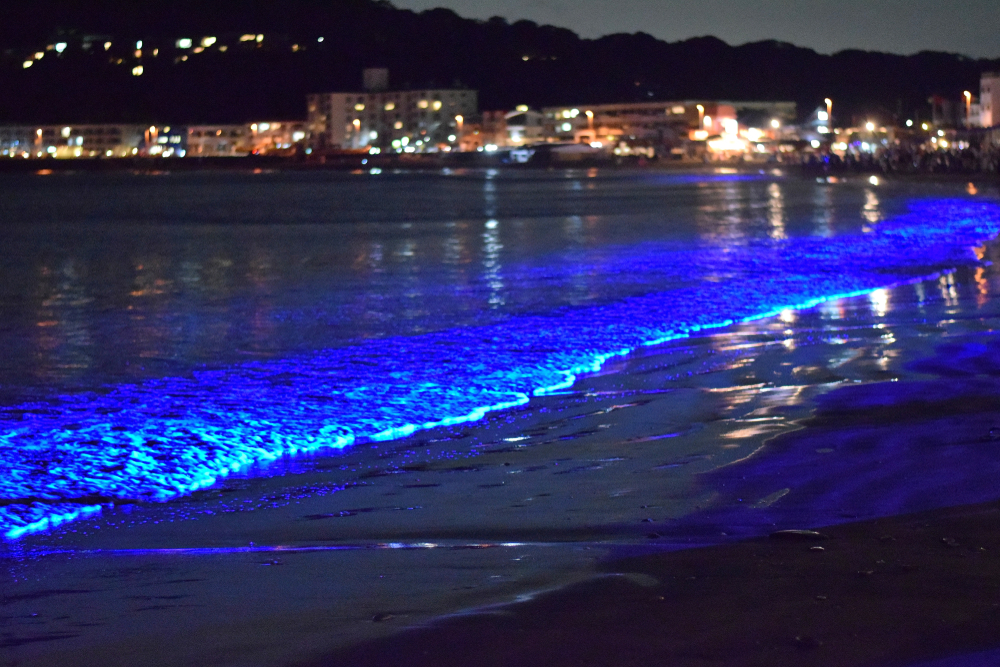
Most deep-sea animals produce some bioluminescent light, but the phenomenon isn’t relegated to the deep: one of the most common sightings occurs at the surface of the ocean. Many small planktonic surface dwellers—such as single-celled dinoflagellates—are bioluminescent. When conditions are right, dinoflagellates bloom in dense layers at the surface of the water, causing the ocean to take on a reddish-brown color in daylight and a sparkly sheen as they move in the waves at night. When the dinoflagellates are poisonous to other animals, these events are called harmful algal blooms (HABs). When they're eaten, the toxic dinoflagellates accumulate in high concentrations in larger fish and filter feeding shellfish. And then when marine mammals or people eat these organisms, it can cause sickness or even death.
Organisms use bioluminescence for survival. It can help them attract prey, communicate with others, defend against predators, or camouflage themselves in their environment. This unique ability plays a crucial role in many ecosystems.