 Our Mission
How It Works
How To Help
Local Maps
☰
Our Mission
How It Works
How To Help
Local Maps
☰
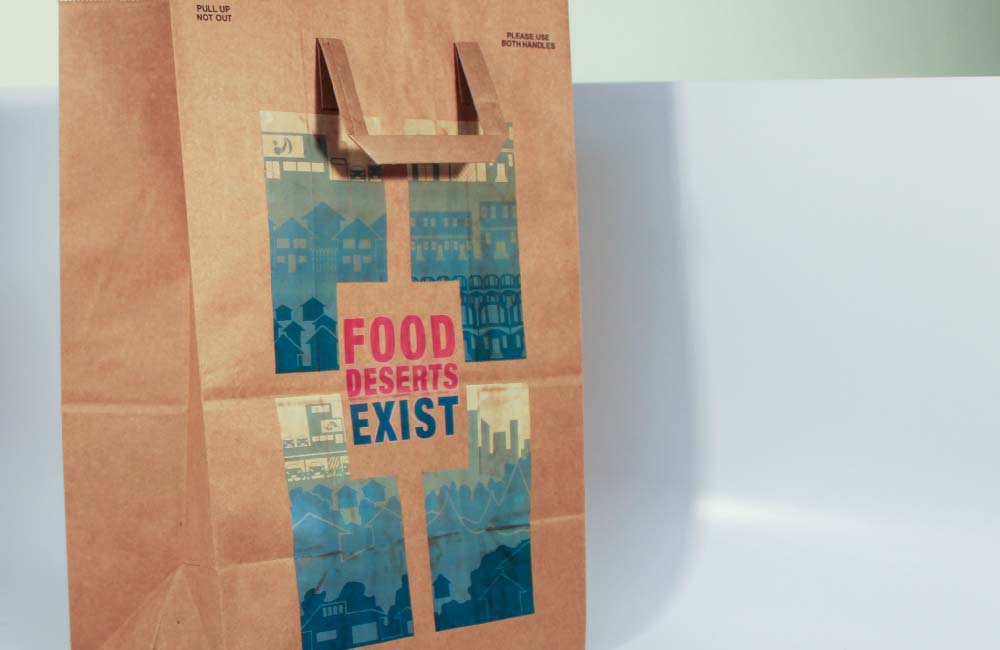
Our mission at Oasis is to reduce the impact of food deserts on citizens around America. Oasis sets up food stalls and community gardens in areas of need, funded by the sale of Oasis grocery bags. Food deserts are formed by redlining, improper zoning and failed urban planning. Communities are either too far away from accessible food, or cannot afford the “high-end” grocery stores. Access to healthy food should not be a privilege, and families should not be forced to shop out of convenience stores because of poor accessibility. The goal is to provide access to healthy food for families, and individuals living in low accessibility areas, whether it is because of income, or distance.
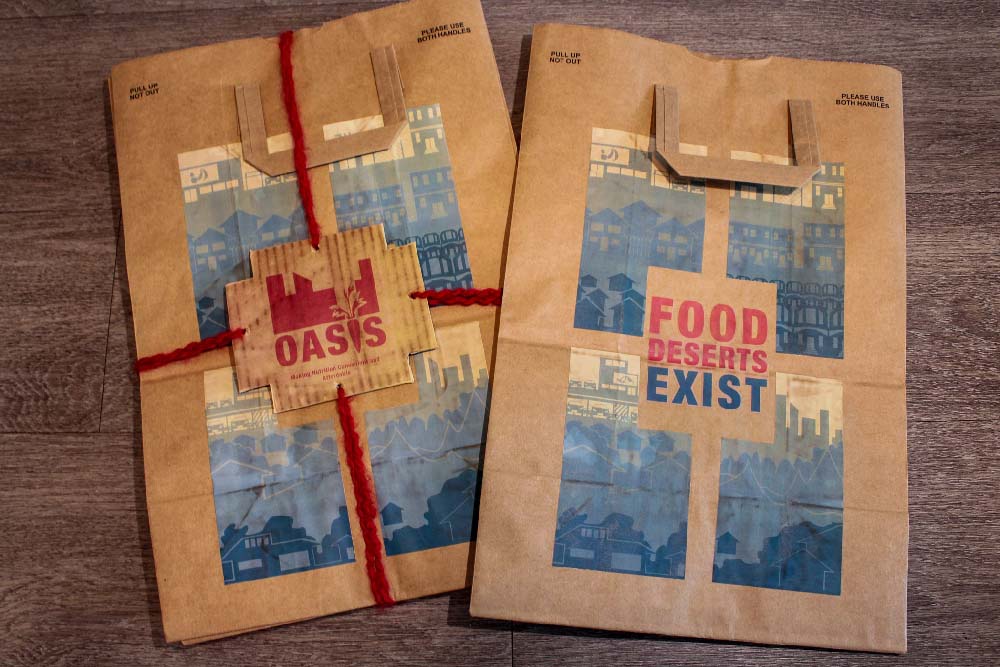
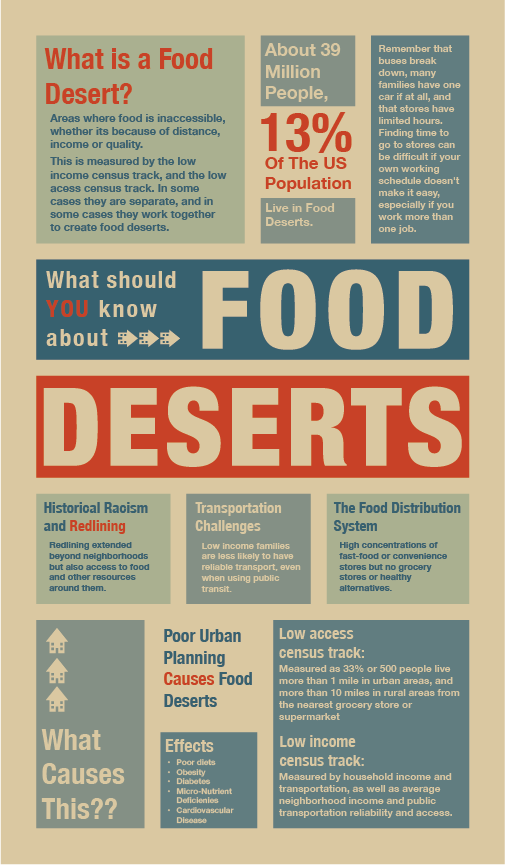
Oasis produces grocery bags on sturdy recyclable paper. The ink is natural and environmentally friendly, allowing easy disposal for customers. Grocery stores purchase our bags in bulk, and stock them at the checkout line. The bags are used instead of or in addition to the grocery stores bags for the customers. The customers receive a flyer serving as a bag bottom support as well to make the bag sturdier. This flyer contains information about food deserts and their effects on the communities around them.
Oasis especially tries to market these bags to secure or name brand grocery stores, like Wholefoods, Weis or Safeway to distribute proceedings from these communities to ones that need more help. This is also done to spread awareness to people who do not live in food deserts. These bags are still sold to family owned or small grocery stores, but a big target is to spread awareness to people outside of food deserts as well. The proceeds go to supporting community gardens, community food stalls, and in some cases food delivery services.
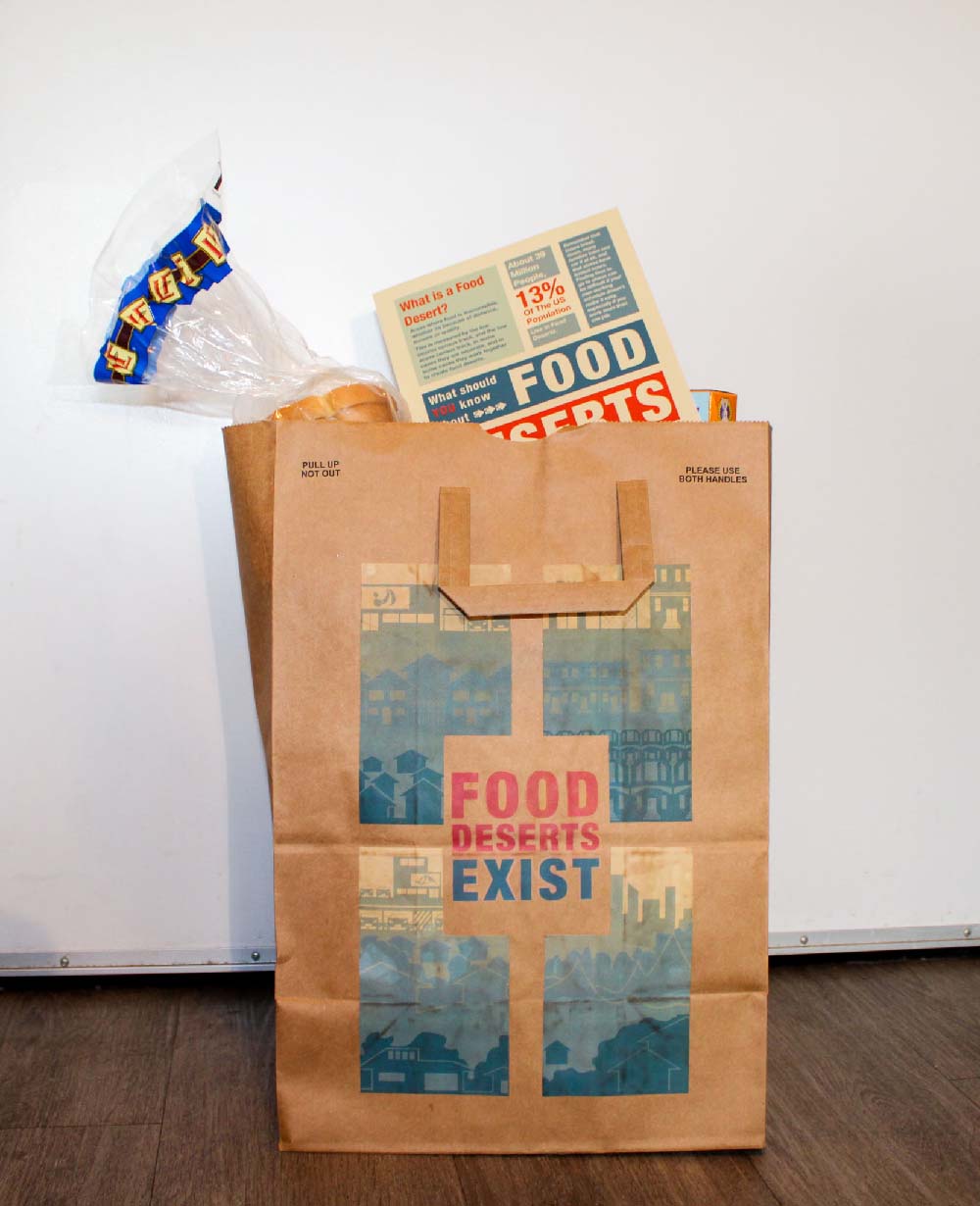
Volunteers are always welcome and needed. Food stalls and community gardens need to be managed, staffed and funded to pay the workers. If time cannot be offered, then donations are welcomed and encouraged. Donation of food and supplies are also welcomed, particularly fresh fruits, and vegetables, legumes, beans, rice, and other long lasting dry goods.
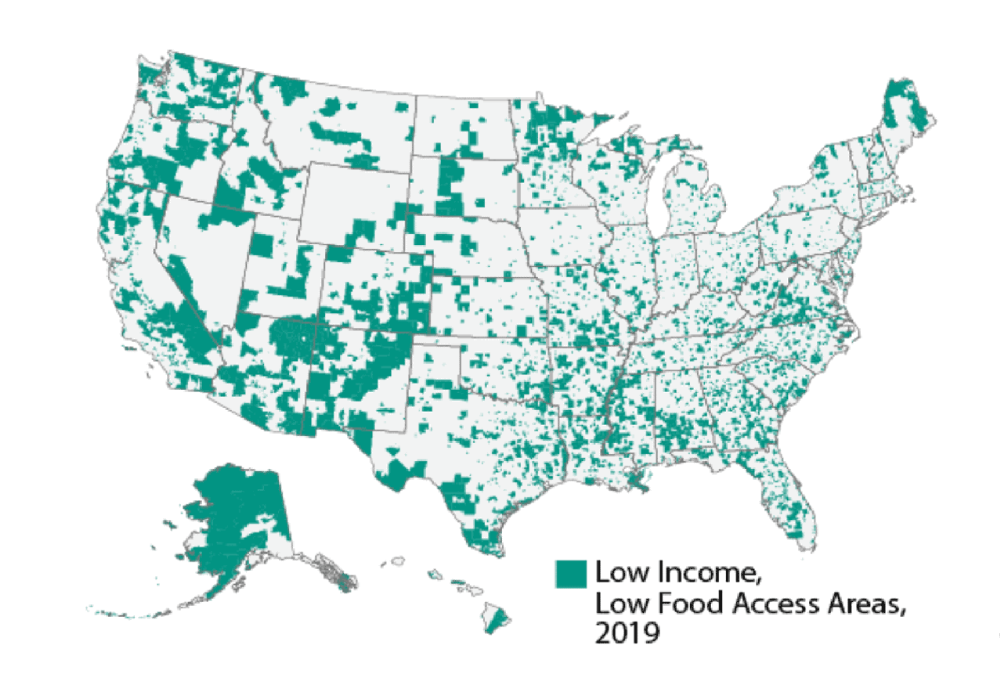
Food deserts can exist rurally, or in densely populated areas. Across the united states there are areas with food deserts because of distance. 13% of the us population lives in food deserts. There are two types of food deserts, caused by two different things. Low access census track, and low income census track. Low access census track measures that 33% of these people live more than 1 mile from a grocery store or supermarket in urban areas, and more than 10 miles in rural areas. Keep in mind urban transportation can vary in accessibility greatly from city to city, and from town to town. The low income census track is measured by household income and access to transportation. This involved how possible is it for low income families to not only physically access the food, but also to afford it.
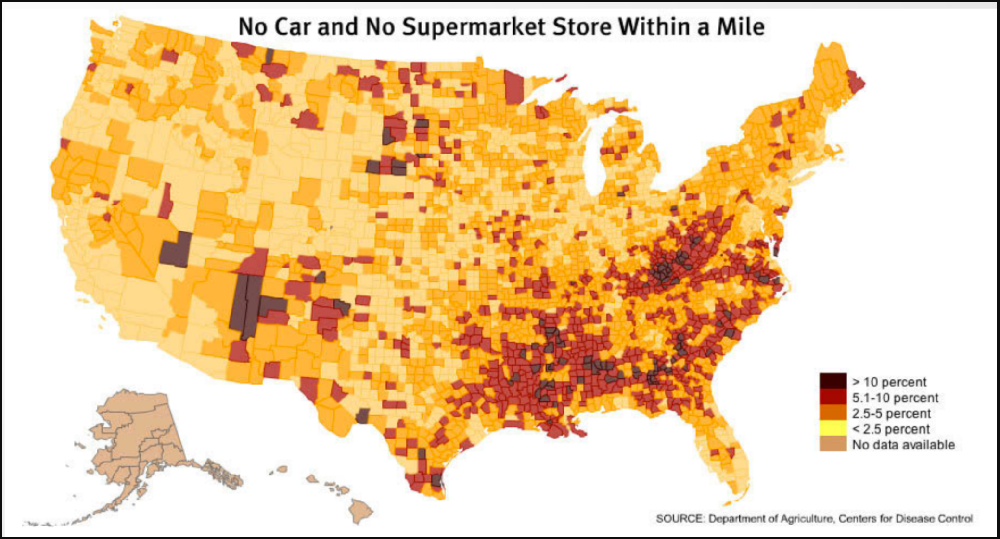
This map shows across the country areas with no car, and no supermarkets within a mile. While a mile while not seem like much to some, keep in mind the elderly, people with disabilities, single parents, and the physical weight of food. As well as time.
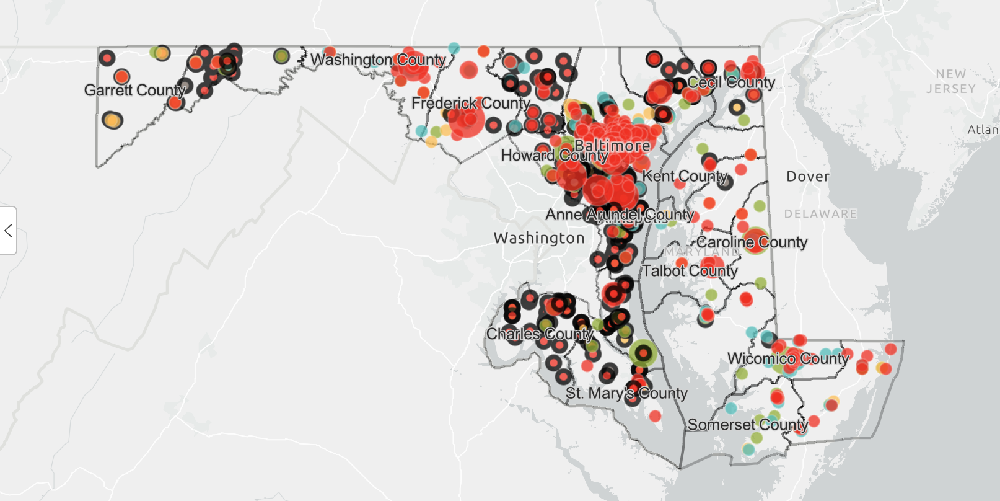
These Points show Food relief stalls and community gardens, in cities in the us. These locations are located near bus stops, or other walkable locations. These stalls are either created by Oasis, or receive financial support from Oasis.
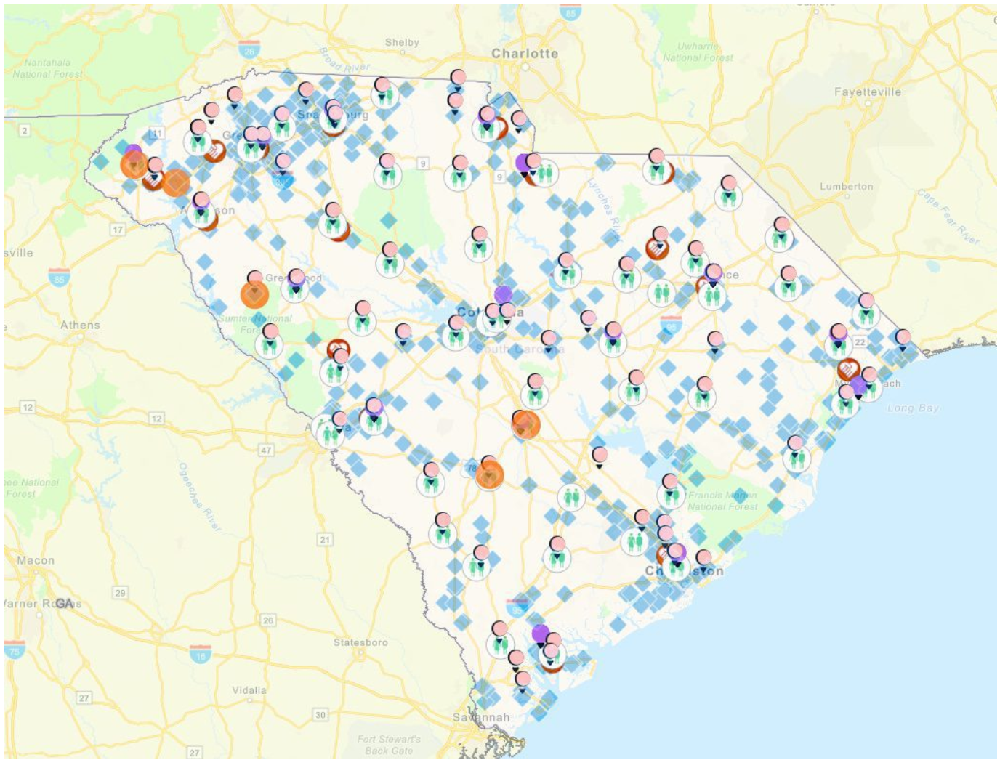
Some states have more food deserts than others, and therefore have more food stalls than others. If you live in a food desert, check our search below for support near you. If you don't, please call us below about sending Oasis support near you.